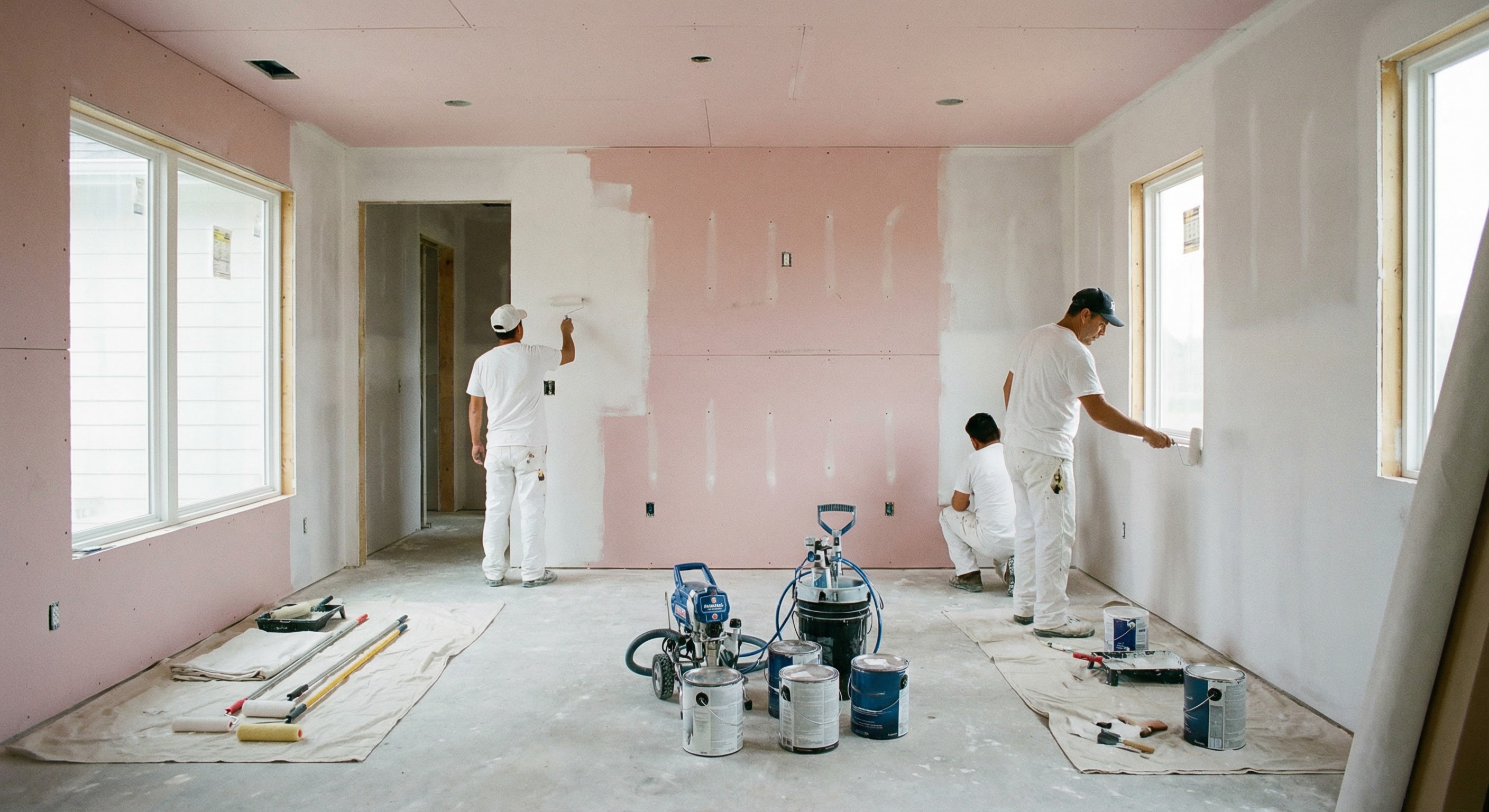
Building a new home is one of the most significant investments a family makes. The paint is one of the last things to go in — and one of the most visible. Getting it right on a new build requires a different process than repainting an existing home, different products, and a contractor who understands how to sequence the work within a busy construction schedule. Here’s what that looks like.
How New Construction Painting Differs
In an existing home, surfaces have been painted before. There are established colors, existing primer coats, and a paint film that can be cleaned, scuffed, and repainted. In new construction, everything starts from bare or freshly finished drywall. Bare drywall is porous, fragile, and highly absorbent. It requires a specific approach: a full seal coat of drywall primer before any finish paint goes on, light sanding between coats to deal with raised grain and minor imperfections, and careful product selection that accounts for the substrate’s absorption rate.
New construction also typically involves painting before flooring installation, before most finish hardware, and before cabinets are installed — which means protecting surfaces that aren’t there yet while also not damaging surfaces that are. The sequencing requires experience.
The Sequencing with Other Trades
On a typical new build, painting happens in phases. Phase one is rough work: painting ceilings, walls, and any surfaces that need to be done before flooring. Phase two is finish work: painting trim, doors, and millwork after installation. Phase three is touch-ups: going back through the entire home after all other trades have finished to address any damage or marks. Understanding this sequence and coordinating with the general contractor is essential. Painters who try to compress all phases into one visit create problems for every other trade on site.
Why the First Paint Job Sets the Baseline
The paint applied during new construction is the foundation for every future repaint. Poorly applied primer or finish coats on bare drywall create adhesion problems, texture inconsistencies, and sheen variations that are difficult to correct later without significant remediation. Getting the first coat right — proper primer, full coverage, appropriate surface preparation — means every future refresh builds on a solid base.
Common Mistakes on New Builds
Skipping the drywall primer is the most frequent error. Painting too soon after drywall mud application is another — the mud needs to fully cure or the paint will bubble and peel. Using incorrect products on fresh drywall (particularly certain tinted primers that raise grain), and rushing touch-up phases after trades finish, are also common shortcuts that create visible problems.
Working with a General Contractor
On new builds, the painting contractor typically works as a subcontractor to the general contractor. A good GC will include painting in the project schedule early and give the painting contractor adequate lead time for each phase. A good painting contractor will communicate clearly about dry times, access requirements, and what’s needed from other trades before they can proceed. That coordination is what keeps a new build moving on schedule.
Vasy Painting has worked alongside some of the best custom home builders in the Seattle and Bellevue area for over 20 years. If you’re a builder or a homeowner overseeing a new build, reach out to discuss your project timeline and get a proposal.